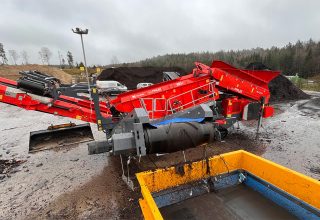
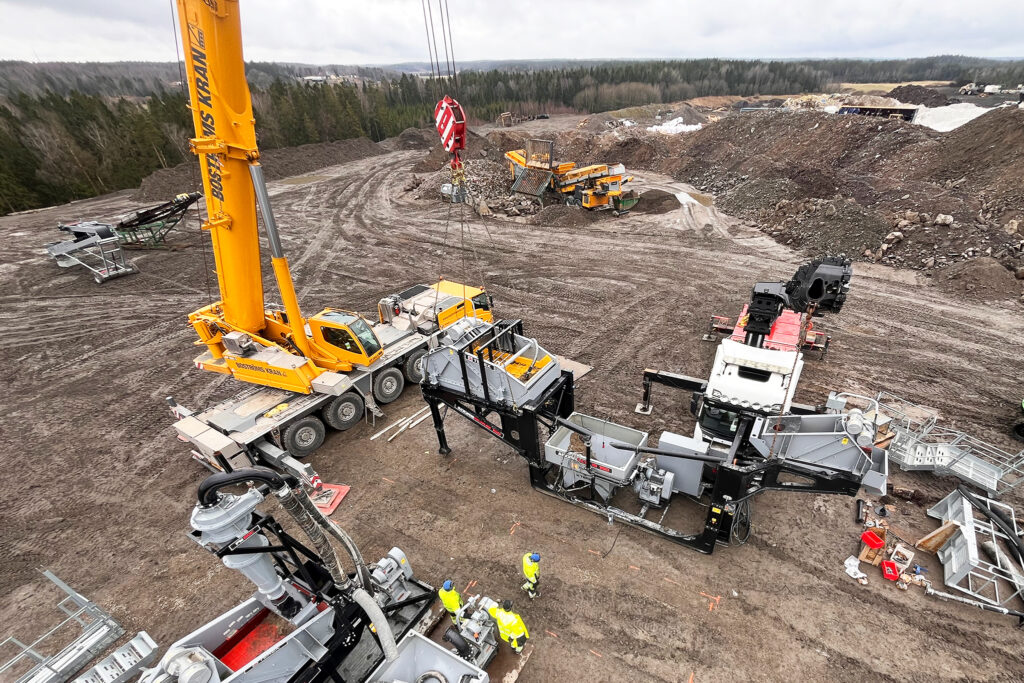
Ragn-Sell's new washing process for excavated material increases the reuse of aggregates

- "By combining dry screening and washing, we get a solution that increases capacity and water efficiency. The result is a circular sand and stone product that can be reused in new infrastructure projects," says Daniel Carlberg, CEO of Norditek.

The new technology is scalable and cost-effective, making it suitable for implementation in more regions. The dry stage separates large rock and clay before washing, increasing capacity and reducing unnecessary water use - the clay does not need to be washed. In the next stage, all iron is removed before washing begins. The washing process itself removes the remaining silt, clay and impurities such as textiles, wood and plastics, leaving a final product of clean sand and stone completely free of impurities. The wash water is purified by sedimentation in a basin and then returned to the process, allowing up to 90% of the water to be reused.

- By washing and reusing contaminated excavated material instead of landfilling it, we can reduce the pressure on our landfills. At the same time, we increase the supply of reused aggregates, which is important for a resource-efficient future," says Tommy Ohlsson, Regional Manager at Ragn-Sells.

Despite technological advances, competing with the price of virgin aggregates remains a challenge, which the industry needs to address to accelerate the transition to more circular materials management.

- "In order for cities like Gothenburg to reach their ambitious target of 50% recycled aggregates by 2030, both the supply of and demand for recycled materials must increase," concludes Tommy Ohlsson.

If you want to know more about the washing process, contact us

Discover the possibilities of circular mass management - join our webinar

In our upcoming webinar, we will provide a detailed overview of how different techniques and processes can be used for everything from soil stabilization to recycling of soil, aggregates and sand. You will also learn how material testing and soil investigations can speed up the process, leading to increased recycling.

Circular mass management - a key to sustainable projects

Recycling materials such as clay, sulphide soils, aggregates and sand is crucial for a more sustainable future. With the right techniques, these materials can be reused in new projects, saving both time and resources. Norditek's solutions have proven to be successful in several large projects where we helped transform waste into useful resources.

Mobile solutions allow us to handle recycling directly in the field, saving both transportation costs and reducing environmental impact. Our machines offer flexible options to process large volumes and adapt processes to specific needs, from stabilizing soil to cleaning contaminated masses.

From soil investigation to pulp recycling

An important part of the process is conducting thorough soil surveys and obtaining material samples. By analyzing the material, we can quickly assess how it can best be recycled and start the process without unnecessary delays. This is of great benefit in projects where time is of the essence. Our webinar will give you an insight into how these studies can optimize the recycling process and what results you can expect.

Learn from real examples and smart solutions

We will also present several concrete examples from real projects where Norditek solutions have played a key role in mass recovery. These case studies show how contaminants can be dealt with effectively and how recycling of masses can be made both faster and more cost-effective.

Who should attend the webinar?

Our webinar is tailored for those who work with construction, recycling, or other sustainability developments and want to understand how today's solutions can contribute to efficient recycling of masses directly in the field. It is also perfect for those who want to gain a deeper insight into circular mass management and how this can create new opportunities in your projects.

Register for our webinar on circular mass management

Join our webinar and learn more about the latest trends and techniques for mass recycling. We will address:

- Smart solutions from the real world: examples of successful pulp recycling and pollution management.

- How material samples and soil surveys can enable effective recycling.

- Discussion opportunities where you can ask questions and get concrete advice.

Date and time: Thursday 28 November, 08:00 - 09:00

Sign up here: Webinar November 28

New technology for clay and soil stabilization launched in Sweden

The mobile recycling plant can handle masses that previously could not be reused. With a maximum capacity of 200 tonnes per hour, the plant is a unique facility with a high production capacity for stabilizing clay soils and other unstable masses.

Read more in the press release: PreZero first with unique clay and soil stabilization plant from Norditek

PreZero will be the first in Sweden with plants. "After a careful process of scanning the alternatives on the market, there was finally only Norditek left who can now solve this with a soil stabilization that provides both the right properties on the ground and can maintain a sufficiently high production capacity without the plant becoming a big monster," says Andreas Pettersson, Norditek.

As the recycling plant is mobile, PreZero can now offer on-site stabilization and reduce transport with negative environmental impact. As it will also be possible to use residual products such as burnt lime or ash in the stabilization process itself, it means that you now get a higher resource efficiency on other materials as well.

PreZero themselves tell us in their press release:

"We are constantly on the lookout and want to be at the forefront of new technological solutions so that we can offer our customers modern and efficient resource management," says Erik Karlstrand, project manager for the soil stabilization project and head of NA construction & infrastructure at PreZero.

The mobile recycling plant for soil stabilization will be commissioned in early 2025.

What's the deal with our new Screening plants?

First of all, what is the point of a Screening plants at all?

A Screening plants is a machine equipped with one or more vibrating grids or screens, called screening media. The material is fed into the machine where vibration or mechanical movement creates a moving mass where smaller particles fall through the mesh while larger particles continue to the next stage of the process. This can be adjusted to suit specific requirements by using screening media with different mesh sizes and shapes, providing a flexible solution for different types of material. The screening plant can also be optimized with different types of magnets to separate magnetic and non-magnetic metals from the material streams.

The advantages of the sieving process

Screening is not only efficient but also cost-effective. It reduces the need for landfill and improves the overall efficiency of the recycling process. By quickly and accurately separating materials, it reduces waste and increases the amount of recyclable material. With our screens, we can offer solutions that not only strengthen customers' recycling capacity but also contribute to a more sustainable environment.

The ES5200 sorting plant from Norditek is designed to efficiently handle and recycle complex materials and waste. The main advantage of this Screening plants is that it is electrically powered, and has a lower energy consumption leading to reduced operating costs compared to other options. It is also designed to work seamlessly with Norditek modules, such as wind screens and water bath, making it a flexible solution for different types of waste.

Key features:

- Efficiency: The ES5200 has a longer screening area and uses flip flow technology that allows it to create cleaner fractions, which is particularly beneficial for sorting mixed materials and pulps.

- Capacity: The integrated control technology gives the operator full control of the machine, increasing precision and optimizing production capacity.

- Energy and environment: The electrically powered design results in lower noise levels and reduced CO2 emissions, making the working environment both quieter and more sustainable.

- Flexibility: The machine can operate several modules at the same time thanks to its integrated generator and smart sequence start. It is also crawler-mounted, allowing easy movement by remote control without the operator having to leave the cab.

Integration of Norditek modules with Screening plants

Norditek has developed specific modules that are optimized to work together with sieves, or Screening plants as it is also called. These modules are designed to complement and enhance the efficiency and adaptability of the screening process. By integrating these modules such as windshifter, water bath or air suction , Norditek can offer a more comprehensive solution that not only handles different types of material more efficiently, but also increases processing efficiency.

Norditek's process from material sample to full production

Before implementing a full screening process, Norditek begins by analyzing the customer's specific material through material sampling. This step is relatively quick but is crucial to ensure that the right technology and machinery is used to meet the unique needs. Through rigorous testing, we can identify the best methods to separate the material and optimize the recycling process. Once the testing has been completed and we have determined the most efficient solution, we scale up the process to full production, where we install and commission the complete machine solution. Throughout the process, from analysis to operation, we work closely with the customer to ensure that the solution not only meets technical requirements, but also improves their overall efficiency and sustainability.

Circular mass management - easier than many think

If you just decide to try, a lot can be done. For example, by simply starting to investigate what materials can be reused on site.

Norditek has worked on many different projects to recycle excavated material. Here we take a closer look at three examples that show how it can be done successfully.

Stockholm Bypass - Hjulsta Norra

The extensive Hjulsta Norra project, as part of the Stockholm Bypass, involved handling large quantities of soil and construction materials. Through an efficient process of screening and homogenization of masses, as much as 40% of the excavated masses could be reused directly on site. This not only reduced the need for landfill, but also led to a major reduction in transportation, which in turn reduced carbon emissions. In total, the project reduced its transportation costs by 20%, a significant saving for such a large project.

Nässjö former industrial site

An old impregnation plant in Nässjö, Sweden, faced the challenge of large volumes of contaminated masses. By screening the material, 15% of the masses could be reused on site as backfill, helping to reduce the need for new raw materials and transportation. Although much of the material still needed to be landfilled, the project demonstrated how flexibility and good communication between clients and environmental inspectors can lead to smarter solutions and reduced environmental impact. This project also illustrates the need to constantly find new and better ways to increase recycling rates in complex projects.

Högsbo industrial site, Gothenburg

In Gothenburg, a project on an old industrial site crushed and reused 100% of the existing rock material directly on site. By recycling this rock material, as many as 5500 heavy transports were avoided, which was a big win for the environment in central Gothenburg. In addition to the rock material, excavated material was also sorted and cleaned from contaminated fractions, allowing a significant portion of this material to be reused on site. This project shows how the circular economy can work in practice and how we can reduce both transportation and resource use through smart recycling.

A full-service provider for efficient mass handling

Maximizing the potential for reuse and resource efficiency in construction and infrastructure projects requires the right equipment, but also a deeper understanding of the material's properties and potential. There is a need for an actor who can carry out analysis based on practical knowledge of methods, technology and equipment. Norditek acts as a total supplier for this type of project by offering both analysis and machine solutions for material handling.

We start by conducting thorough material samples and a site survey to quickly determine what can be reused and how best to dispose of it. Based on this analysis, we can recommend the right solutions and machines for your particular project, whether it involves crushing, screening, sorting or purification of masses. With Norditek as your partner, you not only get access to the right technology - we also ensure that you get the maximum benefit from the resources already in place, reducing both costs and environmental impact.

We always strive to create value through sustainable solutions, and we are proud to help our customers optimize their projects with the right machines and processes. By focusing on recycling and resource efficiency, together we can create a more sustainable society where we utilize existing materials, instead of wasting resources and harming the environment.

Conclusion

Recycling and reusing excavated material is not only a sustainable solution, it is also economically beneficial. By reducing transportation costs, using fewer raw materials and taking advantage of the material already on site, construction and infrastructure projects can both save money and reduce their environmental impact. With Norditek as your partner, you can be sure to get the expertise and machinery solutions needed to make each project as sustainable and efficient as possible. Get in touch with us today if you want to explore what is possible to do in your project.

When should excavated material be recycled?

On-site recycling of excavated material can be particularly beneficial in several circumstances. Both from an economic and an environmental perspective. Here are some situations when it can be particularly appropriate:

  1. Large project volumes: If the project generates large quantities of excavated material, it may be cost-effective to recycle the material on site to reduce transportation costs and the need to purchase new material.
  2. Environmental impact: For projects that aim to minimize their environmental impact, recycling excavated material on site can reduce emissions from transport and contribute to more sustainable construction practices.
  3. Time savings: On-site recycling can reduce the time required for logistics and handling of materials, which can speed up the construction process and reduce the overall project timeline.
  4. Local regulations and incentives: In regions where there are strict environmental regulations or economic incentives for recycling and reusing construction materials, it may be beneficial to process materials on site.
  5. Remote or inaccessible locations: In locations where transportation costs are high or access to recycling facilities is limited, it may be more efficient to handle excavated material directly on site.

If you are considering recycling excavated material, it is easy to investigate whether the material on site can be reused and whether the project is economically viable. Norditek receives material samples and can effectively determine whether the masses can be recycled.

The main benefits of recycling excavated soil are:

  • Thousands of journeys of heavy traffic in inner cities can be avoided to remove materials that can be reused on site.
  • By recycling materials, there is no need to mine new rock or excavate new soil and transport heavy traffic to the site.
  • Major economic benefits for landowners in reduced transportation, reduced purchasing and reduced landfill costs.
  • Huge environmental benefits in terms of traffic reduction and reuse of existing materials.

Do you want to know more about the solutions Norditek has for different types of excavation material? Read more here.

We are now looking for a Product Development Manager

Working closely with customers, suppliers and employees, you are good at prioritizing and driving projects in product development and product improvement (call it responsible, manager or boss - you name it!). You ensure that ideas that add customer value reach the market quickly through effective methods.

You thrive in an entrepreneurial and fast-paced environment where transparency and personal responsibility are highly valued, where we help each other and have fun together. We are convinced that you are also passionate about helping to build a sustainable world where we make much better use of the Earth's resources. Towards a circular future - like a boss

Read more about the product developer position at Elin Mankert Agency

Common challenges in handling large volumes of excavated material and their solutions

Loose masses without bearing capacity

  • Problem: Loose spoil can lack stability and load-bearing capacity, making it difficult to use directly in construction projects.
  • Solution: Possible solution could be to stabilize loose masses with bentonite or lime in a high capacity Screening plants .

Mixed soils with high moisture content

  • Problem: Excavated material with high moisture content can be difficult to handle and reuse directly.
  • Solution: Possible solution is to sort by size with star sieves allowing topsoil to be reused on site or sold.

Contaminated soils

  • Problem: Contaminated soils can spread harmful substances and require special treatment.
  • Solution: Possible solution is to sort out fine fraction where often pollutants are located and blow out organic which often absorbs pollutants.

Too much large stone to be used as soil

  • Problem: Large stones cannot be used directly as soil and require further processing.
  • Solution: A possible solution is to divide the stone into several fractions, such as macadam, carrier layer, sand, etc. These fractions can then be used to replace virgin material.

The right technology to recycle excavated material

  1. Mobile laundry facilities
    • Mobile washing plants are effective in dealing with muddy and sticky masses. They can separate small fractions and reduce the need for landfill by enabling on-site recycling. These plants are cost-effective and can be quickly set up and removed, making them ideal for different project sizes .
  2. Wind sifting
    • Wind screening effectively separates lighter materials from heavier ones, allowing organic material to be recycled and improving recycling efficiency. This reduces waste and improves the usability of the material .
  3. Density separation
    • Using water bath to separate materials based on their density is an effective method of managing mixed waste. This allows materials such as wood and inert materials to be recycled, increasing recycling rates and reducing landfill requirements .
  4. Reuse of aggregates
    • By breaking down rocky spoil into usable materials, it can be reused in new construction projects, saving natural resources and reducing emissions from new mining. This is a sustainable approach that promotes the circular economy .

Recycling of excavated material for sustainable resource management

Efficient management and recycling of excavated material is crucial for sustainable resource management. By implementing advanced technologies and solutions, we can reduce the amount of waste sent to landfill, conserve natural resources and protect the environment for future generations. Norditek offers a wide range of methods and equipment to meet these challenges in a cost-effective and environmentally friendly way .

For more information on how to optimize the management of excavated material in your project, contact us

Sieve soil with air suction or windshifter

Why is the right choice of soil screening method important for your recycling?

  1. Improved purity and quality
    • By sieving soil, we can remove large particles, stones and debris, resulting in a cleaner and more useful end product.
    • This is particularly important when the soil is to be used for backfilling, gardening or agricultural purposes, where purity and quality are crucial.
  2. Effective resource management
    • By recycling and cleaning soil, we reduce the need to extract and transport new soil, saving both natural resources and energy.
    • Recycled soil can be reused in different projects, promoting circular economy and sustainability.

How does it work to sift soil?

  1. Screening plants
    • Screening plants are central to the recycling process and are used to separate soil from other materials at size
    • These machines are equipped with different types of screens and conveyor belts that enable efficient separation of materials.
  2. Windshifter
    • Wind screening is a technique that uses air flows to separate light materials from heavier ones. This method is particularly effective in removing plastics, paper and other light contaminants from the soil.
    • By adjusting the air flow, we can ensure that only the desired material is separated, further improving the quality of the soil.
  3. air suction
    • Air suction works in a similar way to windshifter but uses more powerful suction to remove smaller and lighter particles from the soil.
    • This method is ideal for dealing with finer impurities such as various fragments or small plastic particles, resulting in an even cleaner end product.

Advantages of Norditek soil screening solutions

  • Increased recycling rates: By using our techniques and machines, we can maximize the amount of soil recycled and minimize waste.
  • Cost-effectiveness: Effective separation and treatment of soil reduces the costs of waste disposal and purchase of new soil.
  • Environmental benefits: Less need for new soil production reduces environmental impact and conserves natural resources.

Screening soil using Screening plants, windshifter and air suction are efficient and sustainable methods to handle large volumes of mixed waste.

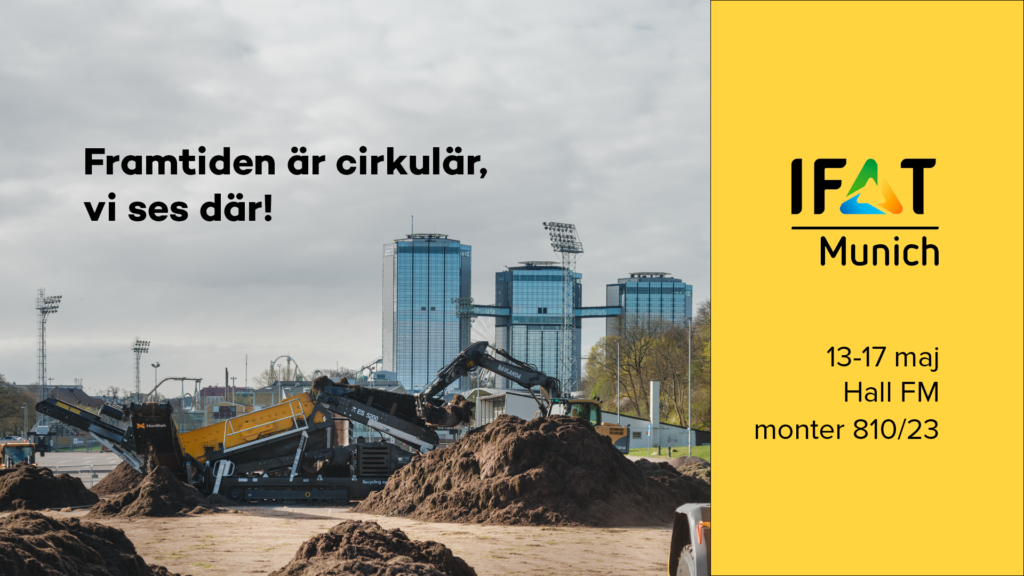
Norditek exhibits at the world's largest environmental technology fair IFAT

Why IFAT?

IFAT is a hub for innovation and sustainability. It brings together industry leaders, decision makers, and experts to present the latest technologies and products in environmental engineering. Norditek is proud to be part of this context, where we get the opportunity to showcase our latest advances and initiatives in recycling and sustainable technologies to a larger audience.

In recent years, we have worked purposefully to be able to offer our unique products to a wider geographical market. We know that there is a larger market than Sweden where the need both exists and also increases in the recycling of more complex material flows.

What can you expect from Norditek?

  1. New products and solutions: We will present our latest products in recycling machinery and the process to succeed. Visitors will have the chance to see our modular systems and learn about how they can be integrated into their existing facilities.
  2. Knowledge and training: Our experts will be on hand to share their insights and experience. We will show you how to go from material samples to test results, solution proposals and full-scale test runs.
  3. Networking opportunities: IFAT is not only an opportunity to showcase our products, but also to network with others in the industry. We look forward to meeting customers, suppliers, and partners, as well as exploring new collaborations that can promote recycling and environmental awareness.

Our vision ahead

Norditek has a strong passion for innovation and sustainability. Our presence at IFAT is a step forward in Our journey to develop recycling technologies and methods to make sustainable solutions more accessible. By creating and spreading efficient technologies, we strive for a more sustainable use of resources.

In conclusion

We look forward to meeting you at IFAT and sharing our progress and future plans. Together we can work towards a more sustainable future, where technology and innovation play a key role in taking care of Our planet. Welcome to stand 810/23 in Hall FM!

Start with a simple material sample

  • Right solution from the start: By analyzing material samples in advance, Norditek ensures that we work with the right solution from the start, minimizing errors, increasing efficiency and saving time and resources.
  • Understanding opportunities: The analysis of material samples provides a deeper understanding of what is possible to do with secondary material streams. This helps to optimize recycling and create sustainable solutions for customers and the environment. Moreover, with lower investment risk as the solution is verified before the recycling plant is designed.
  • Recycling rate: The large amount of material samples that Norditek works with helps us to develop efficient recycling processes for large material flows, such as excavation spoil, biofuels, and industrial waste. Through Our knowledge and experience and our modular system, we can approach the materials with good insight into composition and properties. Therefore, we can increase the recycling rate and ensure that as much as possible of these flows are recycled or reused.

Norditek's material sampling process takes place in these steps:

  1. The sampling phase:
    • A one-kilogram material sample is sent to us, ranging from a contaminated excavation mass to a production waste. We will instruct you how to create a representative one-kilogram material sample. The sample is received by us and our lab for analysis.
  2. The analysis phase:
    • In the laboratory, material testing is carried out, including particle distribution and adaptation to humidity, density and other physical properties (if chemical properties need to be evaluated, we send the material to an accredited laboratory for chemical analysis in consultation with the client).
    • These lab tests then provide a detailed understanding of which recycling methods are appropriate and effective for each material flow. Outputs include sieve curve, mass balance and proposed solutions.
  3. The development phase:
    • Based on the analysis results, Norditek designs and customizes its mobile recycling facilities. This ensures that they are tailored to handle and process the specific material flows in an optimal way.

Do you want to send us a material sample?

How does sorting with a sieve work?

What is sieving and how does it work?

Screening is performed by a machine equipped with one or more vibrating nets or screens, called screening media. The material is fed into the machine where vibration or mechanical movement creates a moving mass where smaller particles fall through the mesh while larger particles continue to the next stage of the process. This can be adjusted to suit specific requirements by using screens with different mesh sizes and shapes, providing a flexible solution for different types of material.

The advantages of the sieving process

Screening is not only efficient but also cost-effective. It reduces the need for landfill and improves the overall efficiency of the recycling process. By quickly and accurately separating materials, it reduces waste and increases the amount of recyclable material. With our screens, we can offer solutions that not only strengthen customers' recycling capacity but also contribute to a more sustainable environment.

Integration of Norditek modules with Screening plants

Norditek has developed specific modules that are optimized to work together with sieves, or Screening plants as it is also called. These modules are designed to complement and enhance the efficiency and adaptability of the screening process. By integrating these modules such as windshifter, water bath or air suction, Norditek can offer a more comprehensive solution that not only handles different types of material more efficiently, but also increases processing efficiency.

Optimizing the Recycling: Methods and Techniques

Why is soil recycling important?

Soil recycling has a direct impact on Our the environment and the economy. Reusing and treating soil reduces the need for landfills, while allowing us to reduce the extraction of new raw materials. This leads to lower carbon emissions and supports sustainable development by preserving biodiversity and promoting a more resilient environment.

Methods for recycling soils

There are several effective methods for recycling soil, depending on the contaminants the soil contains. We are working to increase the recycling rate of soils in everything from excavated soil to rejects from biogas plants. From dry methods to wet ones, it all depends on the material and it is enough that we get a representative material sample to quickly analyze what is possible to do. Some examples of solutions are as follows:

  • Mixed soils with high moisture content - Possible solution is to sort by size with star sieves, allowing topsoil to be reused on site or sold.
  • Contaminated soils - Possible solution is to sort out the fine fraction that often contains contaminants and blow out organic matter that often absorbs contaminants.
  • Stone too large to be used as soil - Possible solution is to divide the stone into several fractions such as macadam, bedding, sand, etc. These fractions can then be used to replace virgin material.

Each method has its specific applications based on the state of the soil and the type of pollution. You can read more about the recycling of excavated material here.

Techniques and equipment for efficient soil handling

To effectively recycle soil, advanced technology and equipment are required. Norditek is at the forefront with innovative solutions such as sorting techniques and crushing equipment, which optimize the recycling process and reduce environmental impact. By investing in the latest technology, we can ensure that soil is recycled in the most efficient and sustainable way.

Case Studies: Successful Soil Regeneration Projects

Over the years, several projects have succeeded with various forms of soil reclamation. One example is the project in Jönköping Municipality, where the reject from a biogas plant is used to recycle it into new and usable soil.

The Future of Soil Recycling, and Circular Economy

The future of soil recycling looks bright, with technological advances and increased awareness of environmental issues. Soil recycling plays a critical role in Our moving towards a more sustainable future. By investing in and applying efficient recycling methods and technologies, we can reduce environmental impact and promote a circular economy. Contact Norditek for more information on different solutions.

Refining wood waste and creating cleaner fuel: Efficient energy recovery from wood

Cleaner fuel through the processing of wood waste

The processing of wood waste involves converting forest industry residues, construction waste, and other wood waste into usable fuel. An important part of this process is the removal of contaminants that can damage heating plant equipment and increase emissions of harmful substances. By using advanced purification techniques, the wood fuel can be cleaned of metals, plastics and other contaminants. This leads to cleaner combustion, reducing the load on the treatment system of the heating plant and contributing to a cleaner environment. Read more about our wood waste processing solutions here.

Optimized size for increased efficiency

The size of the wood fuel also plays a crucial role in the efficiency of combustion. By adapting the size of the wood pieces to the combustion system of the heating plant, a more even and efficient combustion can be ensured. This means not only that more energy can be extracted from each piece of wood waste, but also that combustion is more controllable.

Purified wood flows with the right separation technology

Optimization of fuel size, together with the separation of energy-consuming materials such as stone and gravel, contributes to increased energy efficiency. Because our plants can be easily integrated with wind screens, water bath and different types of magnets, we can remove all pollution and unnecessary materials for burning, which leads to reduced greenhouse gas emissions but above all a better economy.

Benefits of refined wood fuels

  • Eco-friendly energy production: Processing wood waste into fuel contributes to more sustainable energy production and reduces the need for fossil fuels.
  • Higher energy efficiency: Cleaner fuel and optimized fuel size lead to more efficient combustion and higher energy yield.
  • Reduced operating costs and downtime: Cleaner fuel reduces wear and tear and maintenance needs on the heating plant's equipment, leading to lower operating costs and less downtime over time.
  • Fewer ash management problems: A cleaner combustion process reduces the amount of ash that needs to be managed, simplifying waste management and reducing related costs.
  • Improved air quality: A cleaner combustion process, such as the separation of plastics, reduces emissions of harmful substances, which contributes to better air quality.

Concluding thoughts

Processing wood waste into cleaner and more efficient fuel is an important part of the quest for sustainable energy production. By focusing on cleaning the fuel from contaminants and optimizing the size of the wood fuel, thermal power plants can not only increase their energy efficiency but also play a key role in the transition to a more sustainable and clean energy supply. It is time to embrace the potential of refined wood fuels and contribute to a cleaner and greener future.

More advanced recycling of production waste

Turn production waste into resources with our solutions that span multiple material types, including metals, wood, cement, plastics, gypsum, and more. In theory, any mixed material from industrial production is possible to separate. It all starts with a test run of a material sample in our test lab.

1. Recycling of metals:
We offer advanced solutions for recycling metal waste or waste containing metals, from magnetic steel to non-magnetic aluminum. Our flexible solutions allow you to minimize waste and bring valuable materials back into the production cycle.

2. Wood recycling:
Wood waste is an important resource. Our systems streamline the process of recycling and reusing wood waste, contributing to both cost savings and resource efficiency.

3. Recycling of materials such as cement and plaster:
Our innovative methods enable the recycling of cement, bricks, insulation and plaster, transforming construction and demolition waste into reusable materials for new construction.

Norditek's unique modular system and the Norditek staircase

Our customizable modular system provides a unique flexibility to use different separation techniques to achieve a higher degree of refinement. By test driving the material, we ensure the highest material quality with tests and analysis. This methodology, called the Norditectrap, guarantees optimal solutions for each specific material and need.

Flexible waste management

Thanks to the flexibility of our solutions and recycling methods, we can achieve higher processing rates and capacities on a variety of wastes and waste materials.

  • Wide range of materials: Expertise in a variety of materials
  • Customizable solutions: Our flexible modular system and the Norditektrappan testing process ensure solutions tailored to your specific needs with low risk.

Learn more about our solutions for industrial waste

How to properly analyze and classify excavated materials

Geotechnical evaluation of excavated soils for sustainable reuse

The responsible management of excavated soil requires the establishment of site-specific guidance values depending on the land use. By creating effective sampling plans and managing the masses responsibly, recyclable materials can be identified and the necessary measures implemented. Proper management of excavated materials also means safe disposal of those materials that cannot be reused.

Tools and methods for the analysis of excavated materials

A variety of tools and methods are used to carry out an accurate analysis of excavated soil:

  • Laboratory tests: These are essential to determine the physical and chemical properties of the excavated material.
  • Environmental analysis: Important to detect and quantify contaminants within the excavated material.
  • Geotechnical software: Used to model the behavior of masses under different loading conditions.
  • Field tests: Standard penetration test (SPT) and plate load tests assess the bearing capacity of the soil.
  • Classification systems: These systems categorize masses based on their geotechnical properties.
  • Life Cycle Assessment (LCA) and risk assessments: Important to evaluate environmental impacts and potential risks.

These methods are combined to assess the excavated material and its suitability for reuse. Norditek has extensive experience in dealing with various contaminants in excavated material and can quickly start production with the right type of Screening plants and other problem solvers such as a windshifter or a washing equipment, which may be required to get the right solution.

Regulatory compliance and sustainable development

Compliance with laws and regulations is necessary to ensure that processing operations contribute to sustainable development. Therefore, continuous dialog with authorities, environmental agencies and consultants is critical. By engaging all parties, we ensure that our processes are both environmentally friendly and economically sustainable.

The importance of thorough preparatory work

To achieve the best material quality, thorough preparation is essential. This approach is not only beneficial from a technical point of view, but it is also economically and environmentally sustainable. By applying these methods, we contribute to a more sustainable future in the construction sector.

For further information on proper analysis and classification of excavated soil, please do not hesitate to contact us.

Loads of geotechnical assessment tools

Geotechnical evaluation is central to the recycling of excavated soil, with the aim of identifying appropriate remediation methods and effective reuse of materials on site. By analyzing mass properties such as grain size, density and contaminants, we can develop tailored solutions that meet both environmental requirements and reuse objectives.

Responsible mass management

Important aspects include establishing site-specific benchmarks depending on the land use, creating effective sampling plans, and managing masses responsibly. Proper management includes identifying reusable materials, necessary remediation measures and safe disposal of masses.

The following tools and methods are often used in this process:

  • Laboratory tests: to determine the physical and chemical properties of the masses.
  • Environmental analysis: to detect pollution.
  • Geotechnical software: To model the behavior of the masses under different loading conditions.
  • Field tests: such as SPT and plate load tests, to assess the bearing capacity of the soil.
  • Classification system: To categorize masses based on their geotechnical properties.
  • Life Cycle Assessment (LCA) and Risk Assessments: to evaluate environmental impacts and potential risks.

These methods can be used in combination for a comprehensive assessment. Reuse decisions are based on the characteristics of the masses and economic, environmental and regulatory factors.

Permits for mechanical processing and continuous dialog with authorities, environmental agencies and consultants are necessary to ensure that the processes comply with applicable laws and contribute to sustainable development.

In order to achieve the best material quality, the preparatory work needs to be carried out thoroughly. From an economic and environmental perspective, this approach is most beneficial. Contact us if you want to know more.

Notice of the Annual General Meeting in Norditek Group AB 

The shareholders of Norditek Group AB reg. no. 559307-6986 (the "Company" or "Norditek"), with registered office in Askim, are hereby invited to the Annual General Meeting on Tuesday, January 23, 2024 at 16.00. The general meeting will take place at Arkipelagen Företagscenter, Stora Åvägen 21, Askim in Gothenburg, Sweden

Eligibility and registration 

Shareholders who wish to participate in the general meeting shall: 

be entered in the share register maintained by Euroclear Sweden AB on Monday, January 15, 2024 (for nominee registered shares, see also "Nominee registered shares" below),  

notify the Company no later than Wednesday, January 17, 2024 at the address Norditek Group AB, Stora Åvägen 21, 436 34 Askim or by e-mail: info@Norditek.se. The notification should state the shareholder's name, personal or organization number, address and telephone number, shareholding and any assistants. 

Information provided at registration will be processed and used only for the purpose of the meeting. See below for further information on the processing of personal data. 

Fiduciary registered shares 

In order to be entitled to participate in the meeting, a shareholder whose shares are registered in the name of a nominee must, in addition to registering for the meeting, register the shares in his/her own name so that the shareholder is included in the presentation of the share register as of Monday 15 January 2024. Such registration may be temporary (so-called voting rights registration) and is requested from the nominee in accordance with the nominee's routines in such time in advance as the nominee determines. Voting rights registration made by the nominee no later than January 17, 2024 will be taken into account in the preparation of the share register. 

Ombudsman 

Shareholders to be represented by proxy must issue a written, signed and dated power of attorney. The power of attorney may not be older than one year, unless a longer period of validity is specified in the power of attorney, in which case it may not exceed 5 years. If the power of attorney is issued by a legal entity, a certified copy of the valid registration certificate for the legal entity (or equivalent document for a foreign legal entity) must be attached to the power of attorney. The documents must not be older than one year. 

To facilitate registration, the original power of attorney, certificate of registration and other authorization documents should be received by the Company at the above address well in advance of the meeting. 

DRAFT AGENDA 

  1. Election of the chairman of the meeting 
  2. Election of one or more verifiers 
  3. Preparation and approval of the voting list 
  4. Approval of the draft agenda 
  5. Examination of whether the meeting has been duly convened 
  6. Presentation of the annual accounts and audit report 
  7. Decision on: 
  1. adoption of the income statement, balance sheet, consolidated income statement and consolidated balance sheet 
  2. appropriation of the company's profit or loss in accordance with the adopted balance sheet 
  3. discharge from liability for the members of the Board of Directors and the Managing Director 
  1. Determining the number of directors and auditors 
  2. Determination of fees for the board of directors and the auditor 
  3. Election of the board of directors, deputy directors and auditor 
  4. Resolution on authorization for the Board of Directors to decide on a new issue of shares with or without deviation from the shareholders' preferential rights 
  5. Resolution to establish a warrant program for senior executives and key employees
  6. The meeting is closed

PROPOSED DECISION

Item 1 - Election of the Chairman of the meeting

The Board of Directors proposes that Göran Nordlund, Chairman of the Board, be elected Chairman of the Meeting.

Item 7 b - Resolution on allocation of the company's profit or loss according to the adopted balance sheet 

The Board of Directors proposes that the Annual General Meeting resolves that the funds at the disposal of the Annual General Meeting be carried forward and that no dividend be paid to the shareholders. 

Item 8 - Determining the number of directors and auditors 

The Board of Directors proposes that the Board of Directors shall consist of four (4) members with no deputies.
The Board of Directors further proposes that an authorized accounting firm shall be appointed as auditor, with no deputy auditors. 

Item 9 - Determination of fees for the Board of Directors and the auditor 

The board of directors proposes that the annual general meeting resolves that a board fee of SEK 57,300 (one price base amount 2024) shall be paid to the external board member Nina Modig for the period until the end of the next annual general meeting. Other board members who are also major shareholders in the Company shall not receive any board fees. Furthermore, the board of directors proposes that fees to the auditor shall be paid according to approved invoice. 

Item 10 - Election of the board of directors, deputy directors and auditor 

The board of directors proposes that the annual general meeting resolves to re-elect the board members Göran Nordlund, Daniel Carlberg, Martin Larsson and Nina Modig and to re-elect the registered accounting firm Bright Norr AB. Bright Norr AB has announced that if the annual general meeting approves the proposal, the authorized auditor Oskar Hettinger will be the auditor in charge. All for the period until the end of the next Annual General Meeting. 

Item 11 - Resolution on authorization for the Board of Directors to resolve on new issues of shares with or without deviation from the shareholders' preferential rights 

The Board of Directors proposes that the Annual General Meeting resolves to authorize the Board of Directors, for the period until the end of the next Annual General Meeting, on one or more occasions and with or without deviation from the shareholders' preferential rights, to decide on a new issue of shares. The purpose of the authorization is to increase financial flexibility and the Board's scope of action. 

The authorization may be used to issue a maximum of ten (10) percent of the total number of outstanding shares in the Company at the time of the issue decision. 

The issue price shall be determined on market terms. 

The reason for the deviation from shareholders' preferential rights is that newly issued shares or the amount raised in a new share issue can be used as payment for the acquisition of businesses, companies or shares in companies. 

The issue may be made in cash and/or against payment in kind and/or through set-off. 

The board of directors, or the person appointed by the board of directors, shall otherwise be entitled to make such amendments to the above resolution as may be necessary in connection with its registration and to take such other measures as are necessary to implement the resolution.

Item 12 - Resolution to establish a warrant program for senior executives and key employees.

The Board of Directors proposes that the meeting resolves to introduce an incentive program. The warrant program means that the company issues a maximum of 175,000 warrants free of charge to the wholly owned subsidiary Norditek Produktion AB, which entitles the holder to subscribe for a maximum of 175,000 shares in the company with the right and obligation for Norditek Produktion AB to handle the warrants in accordance with the warrant program. 

Subscription of shares under the option program shall take place during the period from 1 February 2027 up to and including 28 February 2027. Upon subscription of shares, the share capital will increase by a maximum of SEK 17,500. 

The subscription price for shares subscribed for by virtue of the warrants, as described above, shall be 150% of the average volume-weighted share price on January 1, 2024 and January 30, 2024.

Norditek will publish the subscription price before the first day of the exercise period. 

Norditek Produktion AB shall offer senior executives and certain key employees to acquire warrants at market price no later than February 29, 2024, which will be determined by valuing the warrants in accordance with the Black & Scholes valuation model. In total, a maximum of 20 percent of the number of options may be allocated to each participant.

The subscription price shall be paid in cash no later than March 31, 2024.

As reasons for deviating from the shareholders' preferential rights, the Board of Directors invokes the following: 

Option programs contribute to higher motivation and commitment among employees and strengthen the ties between the employees and the company. The option program will contribute to the possibilities to recruit and retain knowledgeable and experienced employees and is expected to increase the employees' interest in the business and the development of the company's results. Overall, it is the Board's assessment that the Option Program will benefit both the employees and the company's shareholders through an increased share value. 

The board of directors further proposes that the meeting authorizes the board of directors, or the person appointed by the board of directors, to make minor changes to the above resolution that may be required for registration with the Swedish Companies Registration Office. 

OTHER INFORMATION 

Majority requirements

A valid resolution to authorize the Board of Directors to issue new shares (item 11) above requires approval by at least two thirds (2/3) of both the votes cast and the shares represented at the Annual General Meeting.

A valid resolution to authorize the board of directors to resolve on a warrant program (item 12) above requires approval by at least nine tenths (9/10) of both the votes cast and the shares represented at the annual general meeting. 

Number of shares and votes 

At the time of the issuance of this notice, the total number of shares and votes in the Company amounts to 12,637,727. 

Meeting documents

The annual report, auditor's report and other documents are available on the Company's website, www.norditek.se, at the Company's address Stora Åvägen 21, 436 34 Askim and will be sent free of charge to shareholders who request it and provide their postal or e-mail address. 

Information at the meeting 

The board of directors and the managing director shall, if any shareholder so requests and the board of directors considers that it can be done without material harm to the Company, provide information at the general meeting on circumstances that may affect the assessment of an item on the agenda and circumstances that may affect the assessment of the Company's or its subsidiaries' financial situation and on the Company's relationship with other companies within the group. 

Personal data

For information on how your personal data is processed, please refer to the privacy policy available on Euroclear's website, www.euroclear.com/dam/ESw/Legal/Integritetspolicy-bolagsstammor- english.pdf. 

Certified advisor

Partner Fondkommission AB (phone 031-761 22 30 / www.partnerfk.com) is the company's Certified Adviser on Nasdaq First North Growth Market.

For further information: 

Daniel Carlberg

Phone: +46702190491

Mail: daniel.carlberg@norditek.se

_____________________________

Askim in Dec 2023

Norditek Group AB 

Board of Directors
Annual Report 22/23

Contact for the annual report:
Bernice Wellsted, CFO
bernice.wellsted@norditek.se
076-317 28 84

For further information, please contact:
Daniel Carlberg, President and CEO
daniel.carlberg@norditek.se
070-219 04 91

Landfill mining: Norditek's separation technologies for recycling

1. What is landfill mining?

Landfill mining involves the process of extracting materials from old landfills. This is not only a way to recycle materials but also a method to reduce environmental impact and promote a circular economy. By reusing materials previously considered waste, we reduce the need for new raw materials and contribute to a more sustainable world.

2. Our separation techniques

At Norditek, we use a range of advanced separation techniques to effectively recover materials from landfills:

  • Screening: Our screening techniques are designed to distinguish different materials based on size and consistency.
  • Wind sifter: This method is used to separate lighter materials from heavier ones, which is particularly useful in the recycling of mixed waste.
  • Magnetic separation: Effective for extracting magnetic and non-magnetic components from waste masses.
  • Sensor-based sorting: One of the most advanced technologies that uses sensors to identify and sort different types of, for example, colored contaminants.
  • Density separation with water bath: This method exploits differences in the density of materials to separate them. By placing materials in a water bath, the lighter materials float to the surface while the heavier ones sink to the bottom. This makes it possible to efficiently separate different types of materials, such as plastics, glass, and metals, based on their density.

3. The benefits of our methods

By using these methods, we can recycle a larger amount of materials, reduce the amount of waste and thus also Our the environmental impact. In addition, our processes provide a cost-effective solution for our customers, contributing to a more sustainable and profitable business.

4. Successful projects

We have completed a number of successful projects in landfill mining. Our clients include municipalities as well as private companies. Are you interested in knowing more or discussing a potential project? Contact us at Norditek to learn more about our landfill mining services and how we can help you turn waste into valuable resources.

A powerful Finnish player who can make the quick changeover

Tana's crushers stand out for their versatility. "Versatility is Our 's overwhelming advantage," explains Eetu Tuovinen, Product Manager at Tana. They can handle virtually any type of solid waste, which is a great advantage.

A major strength of the Tana crushers is their ability to handle 'bottlenecks' in the recycling process. They can handle problems such as tangled ship's ropes, car tires, layered objects and mattresses with metal springs. The Tana crushers can handle these materials without the need to separate them from the waste. "All solid materials can be crushed with the exception of very heavily reinforced concrete and excessively large metal materials," says Tuovinen.

Tuovinen emphasizes the ability of Tana crushers to handle versatile and difficult waste. "The crushing process is the same regardless of the power source and material flow. The more diverse and challenging the material reduction needs are, the better the TANA crushers perform compared to other solutions and the faster the investment pays for itself," he explains.

The Tana crushers are used globally for a variety of waste types. In Benelux, for example, they process fishing nets and ship's ropes, as well as greenhouse waste. "These are obviously very niche fields," says Tuovinen. He also mentions that customers in countries like Finland, Estonia, USA, Australia, Cyprus and Turkey use the crushers to process car tires and other traffic waste.

The Tana crushers represent Tana's promise: "From waste to value." They enable the reuse of waste by breaking it down into appropriate particle sizes. This supports the EU Waste Directive and helps ensure that waste can be used as a new material resource or as energy. "The full potential of waste streams is not widely known," says Tuovinen.

With Tana crushers, waste streams can be processed into a wide range of particle sizes, from 50 to 500 mm. "Adjusting the particle size is quick and easy thanks to the screen on the TANA crushers," explains Tuovinen.

In 2024, Tana plans to launch a new powerful machine to improve the recycling of municipal waste, which will enable the separation of organic waste and increase recycling rates. Stay tuned!

Industrial soil recycling: Finding the right solution for sieving soil

The importance of industrial soil seeding

Screening soil on an industrial scale is not just a matter of improving soil quality. It is a critical process for reusing and restoring soil from excavated and compost soils. This process contributes to sustainable development by reducing waste disposal and promoting the reuse of valuable resources. It is also a cost-effective solution for many industries and projects in the construction sector.

Screening contaminated soils

Norditek has several different problem solvers to deal with different types of contaminants in soils. It can be anything from metal in the soil of old shooting ranges to small plastic particles in compost soil. Norditek has developed several machines based on different separation techniques to solve such problems, for example Our windshifter vs 1220.

How to sieve soil effectively

To meet the needs on an industrial scale, robust and efficient screening solutions are required. Here are some of the most commonly used machines:

Shaft sieves for soil

These sieves use vibration to separate smaller particles from larger materials. They are particularly effective at fine-tuning the quality of the soil, which is crucial when recycling compost soil.

Screening plants with a lime mixer

A very time and cost effective way to deal with unstable soils is to use a Screening plants with lime mixes. Depending on the soil properties, a method can be chosen where the unstable soil is dug up and sieved through the Backer 3-fraction star screen.

Trommel screen

Drum sieves are good for treating large quantities of soil. They effectively separate the desired particle sizes from excavated materials, making them a valuable resource for reuse. These screens are designed to handle both dry and wet soil, making them versatile for different types of soil recycling.

Washing facility

The process of washing soils can vary depending on the type and degree of contamination. Here are some common steps that can be included in a washing process. Read more about soil washing here.

Norditek's advanced screening solutions

Norditek is at the forefront of offering advanced screening solutions for industrial soil recycling. With a range of innovative products, Norditek can offer customized solutions that match specific needs and requirements to efficiently recycle soil from excavation and compost soils.

Summary term soil

Targeting soil industrially and getting the right quality and capacity is about using the right equipment and methods. Then companies and industries can contribute to a more sustainable environment while streamlining their operations. With Norditek's leading technology and expertise in the field, we can ensure that your soil recycling process is as efficient and environmentally friendly as possible.

Keywords: soil sieving, soil recycling, industrial soil processing, drum sieves, vibrating sieves, rotary sieves, excavated soil recycling, compost soils, Norditek, sustainable development, environmentally friendly.

Separation techniques for the purification of dirty biofuels

Dirty biofuels

Many heating plants have problems with the control of incoming material from different fuel suppliers such as recycled wood, household waste, grot or other mixed waste containing pollutants such as stone, plastic, paper, etc. Pre-treatment gives a good control of the fuel with a better quality, a higher output and reduced ash handling and avoids expensive downtime.

Norditek can handle more impurities in biomass to convert to clean fuels

Norditek Separation Technician

Wind screening:

Our wind screening process plays a crucial role in removing lighter contaminants such as plastic and paper from biofuels. By using airflows, these unwanted materials are efficiently separated using Norditek's windshifter.

Screening plants:

Norditek's Screening plants are designed to separate different materials with high precision. In the process, the sorting plant is optimized to work together with the other modules and ensure the purity of the biofuels. Norditeks launched the brand new ES5200 electric screen in the fall of 2023.

Crushing:

The crushing technique reduces the size of material, which facilitates subsequent separation processes. This step is important when you need to ensure that the size of the biofuel is correct.

Eddy current magnet:

Our The use of eddy current magnets helps to extract non-magnetic metals from biofuels. This method is particularly effective in isolating aluminum which is a common problem in many FB boilers where they clog the air holes and cause downtime.

Magnetic separations:

To remove magnetic metals, we use powerful magnets such as overband magnets. This process is critical to ensure that iron and its alloys are effectively separated from the biofuel.

water bath:

By using water bath we can separate materials based on density. This is a crucial process to ensure that heavier contaminants are effectively removed from things that float, such as wood.

Norditek's Contribution to Sustainability

Because our modular system handles all these separation technologies in the same facility, we can purify virtually any fuel. Our solutions minimize waste and optimize energy recovery, which is crucial in the energy production of heating plants.

Separation technology for recycling: Sorting with screens

What is Sorting with Sieving? Sorting by sieve, or sieving, is a process where materials are separated based on size and other physical characteristics. This technique is at the heart of many of Norditek's recycling processes, where it helps to streamline the separation of different materials. By using advanced Screening plants , we can accurately separate materials such as plastic, metal, glass and paper.

Norditek's Application in the Recycling Process At Norditek's facilities, screening is a central part of the recycling process. We use specially designed screens to handle a variety of materials, from construction and demolition waste to industrial and household waste. By fine-tuning our screens, we can adapt the process to the specific characteristics of each material type, ensuring a high level of purity and recyclability.

Materials Recycled with Screening A wide range of materials can be effectively recycled using Norditek's screening technology. Here are some examples:

  1. Construction and demolition waste: We separate materials such as concrete, brick, and wood, enabling recycling in the industrial and construction sectors.
  2. Bioenergy: We clean up dirty fuels by separating different contaminants such as rocks, plastics and metals, creating more and better bio-power.
  3. Plastic waste: Screening allows us to separate different types of plastics and prepare them for reuse or energy recovery.
  4. Scrap metal: Sifting makes it possible to effectively separate different metals, facilitating melting and reuse.

Efficiency and Environmental Benefits By implementing advanced screening technology, Norditek has not only increased the efficiency of the recycling process but also contributed to reducing the environmental impact. By recycling more material, we reduce the need for new raw material and thus contribute to reduced emissions and a more sustainable industry.

Conclusion Sorting by sieve is more than just a technology; it is a cornerstone of Norditek's efforts to make recycling more efficient and environmentally friendly. Our practical application of this method within the framework of our modular system shows several opportunities ahead for the recycling of various materials.

Wood waste and energy readiness: increasing capacity with forest waste

Efficient use of forest waste for bioenergy

Forest waste such as grot represents a significant untapped resource for bioenergy production. By converting this waste into energy, we can not only reduce dependence on fossil fuels but also manage forest waste in an environmentally friendly way. This is particularly relevant in Sweden, where the forest industry plays an important role and generates large amounts of waste.

Norditek's separation technologies: a key to profitable bioenergy?

Norditek has extensive experience in converting forest waste into valuable energy. With our advanced separation techniques, we can efficiently sort and prepare forest waste for energy production. Our solutions ensure that materials are separated correctly, increasing the profitability and efficiency of the bioenergy process. Reduced downtime, reduced ash handling and more bang for the buck are possible with the right pre-treatment. This means that even less desirable forms of wood waste, previously considered unprofitable, can now be turned into valuable energy sources.

Strengthening Sweden's energy transition

This can play a significant role in strengthening Sweden's energy resilience. By using old forest waste, such as material from old bark landfills, we contribute to more robust and sustainable energy production. This is not only good for the environment but also for the country's energy security. By diversifying energy sources and using local resources, Sweden reduces its dependence on imported energy and strengthens its position in the energy transition.

Conclusion: a sustainable future

By using Norditek's separation technologies, more wood waste can be converted into bioenergy. Our technology not only enables a more efficient use of forest resources, but also contributes to a stronger and more resilient energy supply. It is time that we see the potential of our forests and use it in the most optimal way.

For more information on the different concepts we have developed, please visit theOur website. Together we can create a more energy efficient future.

[Keywords: bioenergy, wood waste, grot, energy readiness, Sweden, Norditek, separation technologies, circular economy, sustainability, energy efficiency, forest waste, bark landfills, energy transition, sustainable energy production].

Why you should make your biochar production more efficient

Our methods and the growing interest in biochar production enable better use of biomass. With a sustainable and economically beneficial use of organic waste, we contribute to the reduction of climate emissions, promote local economy and sustainability, and open the door to innovation in the field.

Norditek's method for pretreating materials for biochar production enables several things(the method is described here).

  1. Minimized Climate Emissions: Biochar production reduces climate emissions by preventing carbon from biomass from re-entering the atmosphere as greenhouse gases. In addition, biochar replaces other fossil fuels, further reducing emissions.
  2. Sustainable Energy and Recycling: Biochar can be used as a renewable energy source, either through direct combustion or by producing pyrolysis oil for biofuels. At the same time, biochar can be used as a soil conditioner, which improves growing conditions, reduces the need for irrigation and cleans storm water from unwanted substances.
  3. Local Cycle and Economic Benefit: Creating local cycles where waste from parks and gardens is converted into biochar that is returned to the soil promotes sustainability at the local level. In addition, biochar production creates economic value and can potentially reduce waste management costs for residents.
  4. Opportunities for Industrial Applications: Biochar has many uses including in the construction industry (mixing with concrete to create climate neutral building material), animal husbandry (reduction of methane gas emissions in ruminant animals) and biogas production (improved fertilizer production).
Example of how materials are pre-treated for an optimized biochar production.

Biochar binds carbon from organic matter and prevents it from returning to the atmosphere in the form of carbon dioxide and other greenhouse gases. This helps to reduce climate change by storing carbon in the long term. Better use of biomass reduces the need to burn the waste for heat only, and instead creates products with more uses.

  1. Soil improvement: Biochar is widely used as a soil improver. Its porous structure increases soil water holding capacity, improves air permeability and promotes microbial activity, resulting in more fertile and nutritious soil. It can also reduce the need for artificial fertilizers and irrigation water.
  2. Water treatment: Biochar can be used to purify water by adsorbing pollutants and heavy metals from water beds. This makes it useful in water treatment processes and as a method to reduce pollution in stormwater.
  3. Energy and fuel: Biochar can be used as a solid fuel or converted into pyrolysis oil, which in turn can be used as a renewable energy source or as a raw material for biofuels.
  4. Building materials: Biochar can be used as a component in building materials, such as concrete or mortar, to improve their durability and insulating properties.
  5. Agriculture: Biochar is used in agriculture to improve soil quality, increase yields and reduce the need for artificial fertilizers.

In conclusion, biochar is a versatile product that has positive environmental and soil improvement properties and is used in various industries to promote sustainability and reduce environmental impact. Contact Norditek for more information on how you can pre-treat your material for more efficient biochar production.

New method for stabilizing masses

Traditionally, dealing with clayey and unstable soils has been a lengthy and costly process of either excavating the unstable soil, excavating it and then backfilling with stabilized soil, or piling to stabilize the soil. Both methods are time-consuming and a burden on the project budget.

Together with the German machine manufacturer Backers, we can present a method that offers a quick and effective solution for dealing with unstable soils. The method is based on using a star sie ve in an automated process where the exact amount of the right components are mixed in to stabilize the soil. The unstable soil can be excavated, reworked and quality assured directly on site at a comparatively low cost. The result is a stabilized mass that is ready for immediate use.

Another aspect of this new method is that it does not require stationary facilities. Instead, we offer the first mobile facility for soil stabilization. This saves both time and money for contractors, as the entire process can be carried out on site without having to excavate soil masses for sorting and lime mixing.

Given the increasing challenges of unstable soils, the solution is more relevant than ever. It can change the way we deal with unstable masses in construction and infrastructure projects.

The future of excavated soil recycling: Sustainable Resource Management

1. Recycling of stony excavated material:

Rocky excavation materials are a common by-product of construction projects and make up a significant portion of the total volume. Through Norditek's facility, these stones can be broken down into useful materials for use in new construction projects. By reusing rocky rubble, we also reduce the need to quarry new rock, saving natural resources and reducing the emissions associated with this process.

2. Soil-containing excavated material:

Excavated material consisting mainly of soil can also be recycled in a sustainable way. By separating the soil from other materials, it can be reused as fill material or to improve soil quality. This reduces the need to import soil and minimizes waste sent to landfill.

3. Recovery of unstable excavated soil:

Unstable shaft masses pose a particular challenge, especially in light of increasing climate change. Norditek's technologies include methodologies to stabilize these masses, making them safe to handle and reducing the risk of erosion or collapse. By stabilizing unstable masses, we not only create a safe working environment but also prevent potential environmental damage.

4. Recovery of contaminated excavated soil:

Contaminated excavated material is a major environmental challenge. Norditek has developed specialized methods to clean and recycle these masses, minimizing the spread of pollution and reducing the burden on our natural ecosystems.

Prevention of Risks from Unstable Soils and Climate Change:

In a world increasingly affected by extreme weather and climate change, it is important to prevent risks associated with unstable excavated materials. Norditek has methods to prevent such risks. By implementing preventive measures, they can help minimize the risk of unstable masses accelerating due to climate change.

Concluding thoughts:

Our work in excavated material recycling is about promoting sustainable resource management. By focusing on different types of excavated material and developing specialized methods for each, we are working towards a more sustainable future. It's not just about reducing the amount of waste going to landfill, but also about conserving our natural resources and protecting Our the environment for future generations. With the right technology and commitment, we can create a greener and more sustainable Earth.

Wood Waste and Biofuel: A Green Energy Source for the Future

Recycling of stumps and bark

An exciting opportunity is in the recycling of stumps and bark. Traditionally, these parts of the tree have been considered difficult to manage and have often ended up in landfills or burned in open spaces, resulting in unnecessary environmental degradation and the loss of an important resource. However, we have developed innovative methods to convert these materials into useful biofuels.

Methods Developed by Norditek: Efficient Handling of Biomass

Norditek's methods for recycling stumps and bark include Screening plants and windshifter and a lot of experience in the field. Through Our treatment, stumps and bark are broken down in a way that gives the material a low ash content and a high energy value. It can then be used to produce biofuel. This process is not only efficient but also environmentally friendly, as it reduces the need to use fossil fuels and thus reduces greenhouse gas emissions.

Benefits of Norditek's Methods: A Sustainable Source of Energy

Turning wood waste into biofuel using Norditek's methods opens doors to a variety of opportunities. Firstly, we reduce the use of fossil fuels. In addition, we reduce the amount of waste that ends up in landfills, which reduces the risk of pollution and reduces the need to exploit new forest areas to produce energy.

Conclusion: A Greener Future With Norditek Innovations

Our work in managing wood waste and producing biofuels is one way to move towards a more sustainable future. By focusing on efficient ways to manage biomass, we are paving the way for a greener energy future that is less dependent on non-renewable resources and reduces Our the impact on the environment.

More options to plug in when the price of district heating goes up

Biofuel prices are rising sharply, making more types of wood and forest waste interesting to look at. By efficiently separating and treating forest waste, we convert it into fuel with high energy value. This is particularly valuable at a time when the need for good energy is high and forest waste can be used as a resource to produce heat or electricity.

Results from stumps and bark: High energy value and low ash content.

For stumps, it is necessary to crush the waste first before passing it on to a star screen and one or more wind screens. Approximately 70% of the input material then comes out as finished fuel free of stones and gravel, in the right size for a bio-boiler (5-100 mm). 20% of the material needs to be processed again before it can be burned and about 10% of the input material is usually 0-5 mm gravel.

Low ash content

In addition to obtaining a high energy value, this solution helps to reduce the ash content of the recycled material. High ash content can cause problems in the combustion process and lead to pollution of emissions. By reducing the ash content, Norditek makes forest waste more useful and environmentally friendly as a fuel.

The right size and quality for a bio-boiler

Norditek's star screen bark plant and windshifter show how efficient recycling can turn waste into a valuable resource. By transforming forest waste from low energy value and high ash content to low ash content and high energy value, Norditek contributes to reducing the load on landfills and promoting sustainable use of forest resources. Solutions for wood waste such as bark and biomass have been worked on by Norditek for many years.

Our stumps plant: Crusher, Star Sifter and windshifter

Norditek uses a combination of three machines to efficiently recycle forestry waste with stumps: crushing, star screening and windshifter.

1. crushing

Crushing is the first step in the process where forest waste is broken down into smaller pieces. This makes the material more manageable and prepares it for the next steps in the recycling process. 

2. star sifter

The star sieve is used to separate materials of different sizes. In the case of forestry waste, this means that stumps and other larger pieces of wood can be screened from smaller materials such as branches and leaves. 

Backer's star sieves have a separation limit down to 5 mm, which is unique for star sieves. Backer's 5 mm rubber stars have a large diameter which increases the lifespan and ensures that the material is properly screened.

3. windshifter

windshifter is a technique used to remove light materials, such as the wood, from the heavy waste. It works by creating an air stream that blows away the light particles while retaining the heavier waste. This is particularly important as it reduces the ash content of the recycled material, which is crucial for increasing its energy value.

Norditek launches electric Screening plants for cleaner and more efficient recycling

"The main reason we developed the ES5200 is that we saw the need for a low-power diesel-electric Screening plants that fits with our modules, because with these we can recycle more complex waste and production waste. There are many small and large details that allow the customer to earn more money thanks to increased recycling rate and lower operating costs" Daniel Carlberg, CEO, Norditek

Today, Norditek is present at stand 375 at the Entreprenad Live fair outside Gothenburg to showcase the new electrically powered sorting plant, the highlights of which include:

  1. Longer sifting area for cleaner fractions: The extended sifting area with flip flow technology in the new Our machine allows for even more efficient sorting of waste and masses, resulting in cleaner fractions and reduced contamination.
  2. Lower energy consumption and starting current: Norditek's electric Screening plants is designed with energy efficiency in mind, leading to lower energy consumption and reduced starting current, resulting in significant savings in operating costs.
  3. Integrated power plant can power multiple modules: Designed with a smart sequence start, the new sorting plant can power multiple modules simultaneously, increasing the capacity and efficiency of waste sorting. The sequence start makes it possible to stop and start all functions without leaving the cab. Good for the working environment in terms of dust and noise.
  4. New control system provides better control: The advanced control technology in the new machine gives operators better control and increased precision in production.
  5. Electric caterpillar: The operator can caterpillar the machine by remote control without leaving the cab and drive the machine closer to the pile as the pile is moved. Being able to move the machine instead of moving the pile means less use of wheel loaders.

The sorting plant has been developed to fill a gap in today's supply. With Norditek's new electrically powered Screening plants , it is now possible, for example, to run a process line for construction waste 100% on electricity.

"Our new Screening plants is more focused on sorting recycling material than a pure coarse sorter that is more towards rock and heavy shafts. What exists today are rebuilt coarse sorters for waste, but these then suffer from their high energy consumption for lighter materials. So we fill a gap in the range because Our new screen has the same output power but with significantly lower consumption." Johan Marquardt, Product Manager, Norditek

Some additional benefits that the sorting plant offers are:

Remote control with more functions: The machine offers an advanced remote control with more functions to simplify and streamline operation and monitoring.

Lower noise level and reduced CO2 with electric drive: The electric motor in Our sorting machine results in lower noise level during operation, creating a more pleasant working environment.

Overband magnet and end roller magnets from factory: Our machine is equipped with overband magnet and end roller magnets directly from factory, which guarantees high performance and efficiency.

Possibility to extend the machine with tracking system and production data: It is possible to upgrade the machine with a tracking system and get production data for all fractions, giving even more visibility and control over waste management.

Optimized for Norditek's modular system: The sorter is perfectly adapted to integrate seamlessly with Norditek's modular system, providing a seamless and powerful waste management solution.

Conveyors roll into the range

In a collaboration with Coveya, Norditek is now launching a product line of modular belt conveyors perfect for recycling, soils, construction waste and biomass, and more. The products have been on the world market for a long time and are both robust and very efficient, which is why Norditek has now chosen to launch them in Sweden.

With a strong commitment to innovation and sustainability, Norditek is constantly expanding its modular recycling system and the new products are well aligned with streamlining the management of waste recycling and biomass transportation. These robust conveyors improve efficiency, sustainability and economy in waste management.

Modular design: Conveyors with great flexibility

At the heart of Norditek is the idea of modular design to handle more and more complex problems in recycling. This modular approach has also guided the engineers at Coveya in designing belt conveyors to suit the specific needs of different industries. Whether transporting recyclable materials, construction waste or biomass, these belt conveyors can be tailored to optimize loading, unloading and transport processes, reducing downtime and increasing operational productivity.

Robust construction: Designed for the toughest tasks

Norditek's new conveyors are not only modularly designed; they are carefully engineered to withstand the toughest working conditions. The robust construction ensures that they can seamlessly handle heavy loads, withstand harsh environments and withstand heavy use. This durability leads to reduced maintenance requirements, longer service life and ultimately a more sustainable investment for recycling and waste management companies.

Norditek's new belt conveyors can be found here

Contact us

What can we help you with?

Feel free to contact us and we will tell you more about how you can maximize your recycling.