

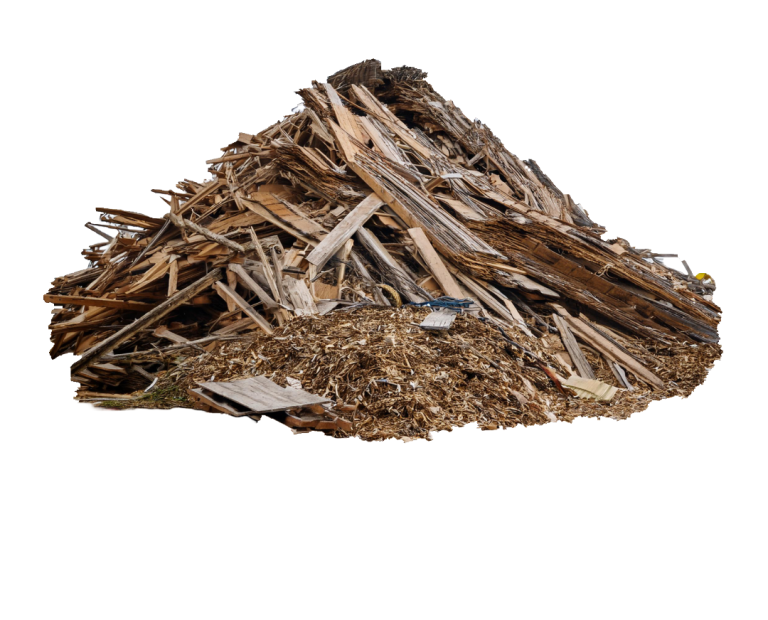
Every year, construction and demolition projects generate enormous amountsof wood waste. It is often viewed simply as a cost to dispose of—but with propersorting,the material can instead be resold and generate revenue. This makes wood waste a valuable resource in the circular economy.
Different types of wood waste and their value
To successfullyrecycle wood waste, it is important to understand the different categories:
Solid wood (Grade A wood)
Untreated wood with high market value. Used aswood biofuel, pellets, or raw material for new building panels or furniture.
Painted or varnished wood (Class B wood)
Commonly found in demolition debris. After proper sorting, it can be used as fuel in heating plants. It can be separated from other clean wood through optical sorting.
Pressure-treated wood (Class C wood)
Contains chemicals and requires special handling. It has no direct economic value, but proper handling protects the environment.
Composite materials and furniture
Often contains wood, plastic, and metal. With modernsorting technology, these materials can be separated for recycling.
Economic benefits of wood recycling
Simply sending wood to a landfill is expensive. Byrecycling wood, companies can instead:
- Reduce landfill costs.
- Sell wood wasteas a raw material to heating plants, pellet manufacturers, or producers of building materials.
- Increase profitabilityby supplying high-quality, clean materials.
With the right strategy, wood waste doesn’t have to be a burden—it can be a profitable business.
Sorting machines that increase the value of wood waste
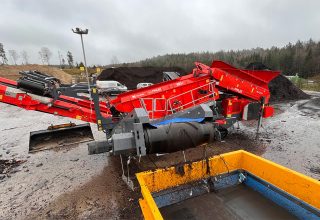
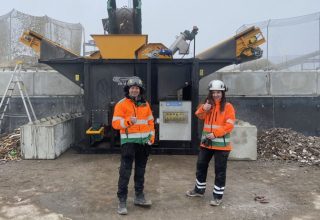
The key to success lies in the technology. With Norditek’s wood sorting machines, companies can:
- Separate Grade A lumber from Grade B and C lumber.
- Remove plastic, metal, and other unwanted materials.
- Deliver a product that meets market requirements.
In this way, wood waste is transformed into a resource that both reduces the environmental impact and strengthens the company’s business.
Conclusion: Wood waste as a resource in the circular economy
Recycling wood wasteisn’t just about the environment—it’s about the bottom line. Bysorting wood efficiently, companies can turn costs into revenue and contribute to a more sustainable future.
👉 Want to learn more about how Norditek’swood sorting machinescan help you maximize the value of your wood waste?Contact usat today.