
If you just decide to try, a lot can be done. For example, by simply starting to investigate what materials can be reused on site.
Norditek has worked on many different projects to recycle excavated material. Here we take a closer look at three examples that show how it can be done successfully.

Stockholm Bypass - Hjulsta Norra
The extensive Hjulsta Norra project, as part of the Stockholm Bypass, involved handling large quantities of soil and construction materials. Through an efficient process of screening and homogenization of masses, as much as 40% of the excavated masses could be reused directly on site. This not only reduced the need for landfill, but also led to a major reduction in transportation, which in turn reduced carbon emissions. In total, the project reduced its transportation costs by 20%, a significant saving for such a large project.
Nässjö former industrial site
An old impregnation plant in Nässjö, Sweden, faced the challenge of large volumes of contaminated masses. By screening the material, 15% of the masses could be reused on site as backfill, helping to reduce the need for new raw materials and transportation. Although much of the material still needed to be landfilled, the project demonstrated how flexibility and good communication between clients and environmental inspectors can lead to smarter solutions and reduced environmental impact. This project also illustrates the need to constantly find new and better ways to increase recycling rates in complex projects.
Högsbo industrial site, Gothenburg
In Gothenburg, a project on an old industrial site crushed and reused 100% of the existing rock material directly on site. By recycling this rock material, as many as 5500 heavy transports were avoided, which was a big win for the environment in central Gothenburg. In addition to the rock material, excavated material was also sorted and cleaned from contaminated fractions, allowing a significant portion of this material to be reused on site. This project shows how the circular economy can work in practice and how we can reduce both transportation and resource use through smart recycling.
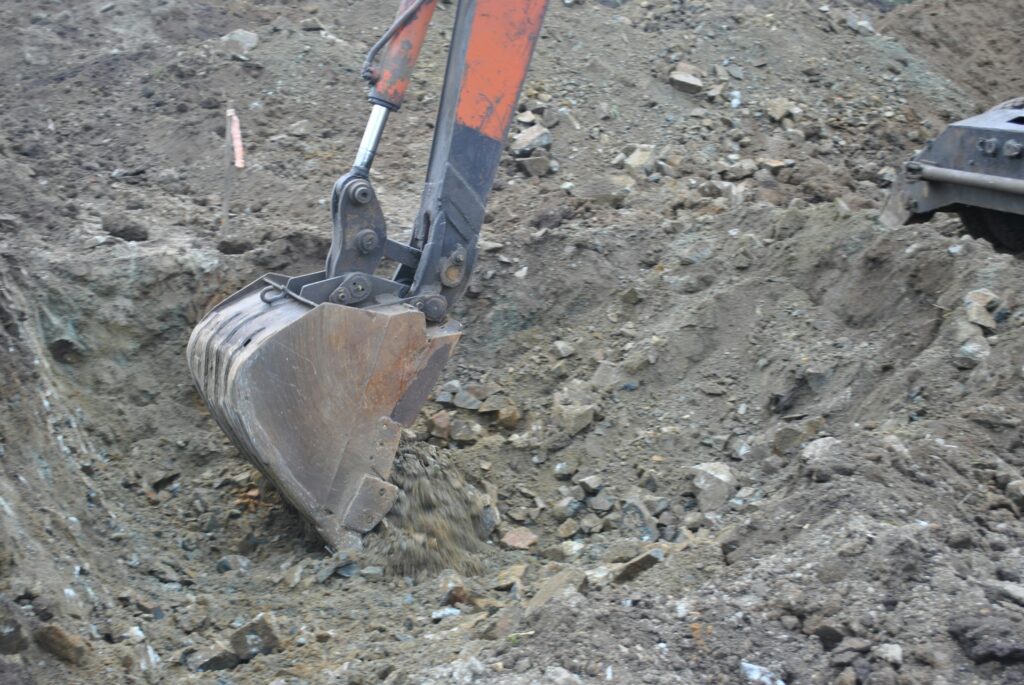
A full-service provider for efficient mass handling
Maximizing the potential for reuse and resource efficiency in construction and infrastructure projects requires the right equipment, but also a deeper understanding of the material's properties and potential. There is a need for an actor who can carry out analysis based on practical knowledge of methods, technology and equipment. Norditek acts as a total supplier for this type of project by offering both analysis and machine solutions for material handling.
We start by conducting thorough material samples and a site survey to quickly determine what can be reused and how best to dispose of it. Based on this analysis, we can recommend the right solutions and machines for your particular project, whether it involves crushing, screening, sorting or purification of masses. With Norditek as your partner, you not only get access to the right technology - we also ensure that you get the maximum benefit from the resources already in place, reducing both costs and environmental impact.
We always strive to create value through sustainable solutions, and we are proud to help our customers optimize their projects with the right machines and processes. By focusing on recycling and resource efficiency, together we can create a more sustainable society where we utilize existing materials, instead of wasting resources and harming the environment.
Conclusion
Recycling and reusing excavated material is not only a sustainable solution, it is also economically beneficial. By reducing transportation costs, using fewer raw materials and taking advantage of the material already on site, construction and infrastructure projects can both save money and reduce their environmental impact. With Norditek as your partner, you can be sure to get the expertise and machinery solutions needed to make each project as sustainable and efficient as possible. Get in touch with us today if you want to explore what is possible to do in your project.