
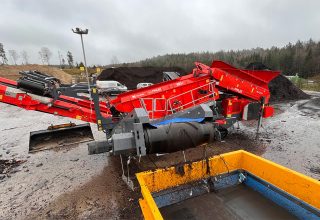
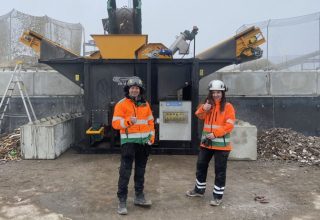
Do you have non-magnetic metals or plastic contaminants that need to be separated from your waste streams? Join us at Norditek’s Demo Days—an opportunity to see our solutions for complex waste management in action.
Contact us to schedule an appointment
Bring a material sample, and we’ll analyze it on-site and show you how our modular machines—such as eddy current separators, air classifiers water bath and water bath can optimize your recycling process.
By testing our solutions with your own materials, you’ll gain a concrete understanding of how we can help you improve your waste management.
Learn more about our machines for difficult materials
By combining our modules, Norditek can tailor solutions for various types of waste streams. For example, a process might begin with a Screening plants a windshifter remove light contaminants, followed by an eddy current magnet to extract non-magnetic metals, water bath then a water bath separate materials based on density.
See and read more about our modules here:
🔄 Eddy Current Separator
Function:Uses rotating magnets to induce currents in non-magnetic metals (such as aluminum and copper), creating a magnetic field that repels these metals from other materials.
Applications:
- Separation of non-magnetic metals from mixed construction and demolition waste.
- Recycling of metals from wood waste and other bulk materials.
Advantages:
- Efficient recovery of valuable metals that are otherwise difficult to separate.
- Reduces the need for manual sorting and improves the purity of recycled materials.
🌬️ windshifter
Function:Uses controlled airflows to separate materials based on weight and density. Lighter materials are blown away from heavier fractions.
Applications:
- Removal of plastic, paper, and other light contaminants from soil and compost.
- Separation of plastic from wood in construction waste.
Advantages:
- Improves the quality of recycled soil and compost.
- Enables the production of cleaner fuel fractions from mixed waste.
💧 water bath float-sink separation)
Function:Takes advantage of differences in density between materials. Materials that are lighter than water float, while heavier materials sink.
Applications:
- Separation of plastic from stone, glass, and metals in mixed waste.
- Removal of contaminants from soil and excavated material.
Advantages:
- High separation efficiency for materials of similar size but different density.
- Reduces the amount of contaminants in recycled materials.